Driveway Drainage Solutions That Prevent Flooding and Foundation Damage
If water keeps pooling on your driveway or pushing toward your foundation, it is time to look at professional driveway drainage solutions. In Manassas, heavy spring rains and freeze‑thaw cycles can force water under your pavement, where it weakens the base and creeps toward your home. The fix is not a quick patch. It is a plan that manages runoff, reshapes grades, and moves water to a safe place. See how the local pros at PAVETEC diagnose and solve the problem, starting with a careful inspection and a custom plan for your property. If you are already seeing puddles or damp spots, explore our drainage solutions to get ahead of damage.
Why Driveway Drainage Matters In Manassas, VA
Our area sits on dense, moisture‑sensitive soils. When water sits on asphalt, it seeps into tiny openings and the base below. Winter and early spring make that worse. Water freezes, expands, and pries the pavement apart. Summer heat softens weakened spots and car tires grind them down. Over time, small puddles turn into ruts, cracks, and heaving near your garage or the street apron. Left alone, the same water can push toward block walls and footers, raising the risk of foundation stress.
What Water Does To Asphalt And Foundations
- It undermines your base. Saturated soils lose strength, so the driveway flexes and settles.
- It widens cracks. Freeze‑thaw pressure turns hairline cracks into open seams that collect more water.
- It targets weak edges. Where the asphalt meets lawn or curb, repeated wetting erodes support and the edge crumbles.
- It finds your house. Runoff flowing toward the garage or basement wall increases the chance of seepage and musty odors indoors.
Never ignore water that sits for hours after a storm. If you notice puddles the next morning, drainage is not working as designed.
Warning Signs Your Driveway Needs Better Drainage
Across Old Town Manassas, Sudley, West Gate, and Bristow, we see the same early clues:
- Puddles that linger half a day or longer, especially near the garage doors or driveway apron
- Fine mud trails running off the sides of the driveway after a storm
- Strips of asphalt that look dull or brittle where water often sits
- Grass dying or shallow ruts forming along the edges
- Water washing over the sidewalk at the bottom of the slope
Do not drill “relief” holes in your asphalt. That weakens the structure and still does not manage where the water goes.
Proven Drainage Solutions For Asphalt Driveways
Every driveway and yard is different, so PAVETEC starts with measurements, elevations, and a water‑flow check during or right after rain. Then we match the fix to what the site needs.
Regrading And Slope Correction
Small changes to slope make a big difference. We reshape low spots and add subtle crowns so water sheds to landscaping or a drain instead of pooling in the middle. When grades are tight near the garage or sidewalk, precise milling and re‑paving can redirect flow without raising thresholds. Learn how our grading service restores proper runoff and strengthens your base.
Trench Drains And Channel Drains
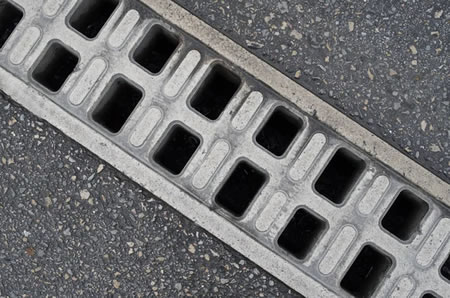
At the bottom of a sloped driveway or in front of garage doors, a high‑quality channel drain captures water and sends it to a safe outlet. The grate sits nearly flush with the asphalt for a smooth approach. We size the drain for local storms and tie it into a discharge line that will not back up. For homes near Liberia Avenue or Centreville Road where traffic splash adds water, a trench drain is often the cleanest solution.
French Drains And Swales
Where runoff crosses the yard and onto the driveway, a French drain or shallow swale intercepts water before it reaches the asphalt. A French drain uses a gravel‑filled trench with a perforated pipe, wrapped so soil stays out. A swale reshapes the lawn to guide water quietly around the pavement. Both options protect edges, stop washouts, and reduce long‑term maintenance.
Stabilized Edges And Transitions
Edge failures start when water softens the shoulders. We reinforce sides with compacted stone and proper asphalt thickness, then seal joints at sidewalks and aprons. In shade or under downspouts, we may add a small paved gutter or paver band so dripping water does not chew the edge.
The best drainage plans combine two or three tactics. For example, light regrading plus a short trench drain can solve most pooling at garage doors without altering the whole driveway.
Solving Water Pooling On Driveways Near Old Town, Sudley, And West Gate
Local streets and lots can tilt water toward private driveways after repaving. We see it most where curbs concentrate flow or where a driveway meets a crowned road. Here is how a typical fix comes together:
- Survey the high and low points with a laser so we know where water wants to go.
- Map roof leaders and sump pump outlets. These can dump thousands of gallons near the driveway in a single storm.
- Adjust grades in the first 10 to 20 feet closest to the garage so water turns away from the house.
- Install a channel drain across the threshold if grade alone is not enough.
- Protect edges with stabilized shoulders and seal the new joints.
For homes along tree‑lined roads, leaf drop can slow water at grates. We set drain locations where debris is less likely to collect and size the grate openings to keep flow moving. Keeping these capture points clear after big storms is essential for reliable performance.
Asphalt Details That Support Good Drainage
Stronger Base And Compaction
Water cannot ruin what it cannot reach. A dense, well‑compacted base stops infiltration and resists rutting. We match base thickness to load, then compact asphalt to the right density so it sheds water rather than soaking it up.
Smart Joints And Edge Support
Driveways fail early where thin edges crumble or where new asphalt meets old. We build edges with solid support and use clean, straight joints at aprons and sidewalks so water cannot slip between surfaces. If cracks start later, timely asphalt repair keeps water out and extends the life of the whole surface.
Surface Smoothness And Subtle Crowns
Drainage depends on smoothness. Tiny sags hold water even if the overall slope looks right. Our finish pass and roller patterns are chosen to keep the surface true so water drains in minutes, not hours.
When Drainage Problems Mean It Is Time To Rebuild
If the base is soft across wide areas or water keeps returning after patching, the lasting answer is to rebuild the structure. That means removing failed layers, correcting the base and grades, and installing fresh asphalt in lifts. For a quick comparison of options, see our guide on asphalt removal vs. resurfacing. It explains why overlays cannot solve deep drainage issues and how a reset protects your home and driveway for years.
Our Process For Driveway Drainage In Manassas
1) Assessment
We listen to your concerns, walk the site, and record elevations. Photos during a rain event are helpful. We check how water arrives at the driveway and where it should go safely.
2) Design
Based on grades, soils, and space, we choose the right mix of regrading, drains, and edge improvements. We size components for Northern Virginia storms and set outlets where they will not cause erosion.
3) Build
We protect landscaping, control runoff during work, and keep access clear. Our crews install drains, regrade low spots, and restore pavement with smooth transitions at your garage, sidewalk, and street.
4) Finish And Protect
We seal critical joints and confirm water moves off the surface. You get simple care steps to keep drains clear and your driveway looking sharp through Manassas winters and summer downpours.
Common Questions From Manassas Homeowners
Will a trench drain in front of my garage be noticeable?
Not much. Modern channel drains sit nearly flush with the asphalt and use durable grates that blend with the surface. We set the height precisely so tires roll smoothly.
Can regrading fix my puddles without a drain?
Often, yes. Shaving a high spot and filling a shallow dip can restore flow. When space is tight or storms are intense, a short trench drain adds extra protection.
What about water from roof downspouts?
We look at those too. Redirecting downspouts away from the driveway or tying them into an underground line prevents concentrated flow across the pavement.
Ready To Stop Pooling And Protect Your Foundation?
Whether you are off Sudley Road, near Signal Hill Park, or by the VRE, PAVETEC designs drainage that fits your home and our local weather. If you want a quick overview of options from a trusted local crew, start at driveway drainage solutions in Manassas, VA and schedule a visit. For a hands‑on plan that redirects water and protects your investment, talk with us today at 571-404-7283. When you are ready, see how our team handles end‑to‑end drainage solutions and installation that lasts.
Get Started With Our Paving Company In Manassas & Surrounding Areas